WELCOME

Welcome to our Gardening Club Rhydlewis and District Gardening Club has been around since the time of Adam and Eve. In fact, it is believed that one of our members planted and tended the very apple tree that gave rise to the pair being expelled from the garden!!

Whether this urban myth is true or not, the club is here to encourage, improve and extend the members' knowledge of all branches of horticulture. It is open to everyone and new members are all always welcome to come along.

Our activities during the year include a varied programme of talks and social events, summer garden visits, a plant sale, social gatherings/bbq and an annual open show in August.


Friday, 17 April 2020

Corona Virus; a chance to win a free book

The sun has shone perpetually over the last week, with clear blue skies and temperatures high enough to eat (and drink!) in the garden.

And by the look of the activity on the gardening club Facebook page, we're all taking the opportunity to get out and garden. 

Thank you for all your photographs and comments and news; it's a great way to stay in touch while we're isolated in our houses. Please keep it all coming while the gardening club are unable to meet at the village hall.

We are, mostly, the lucky ones, living in the countryside and having gardens to get out into. 

I was giving the dog our alloted 'exercise time' in the lanes around my house yesterday, when I realised how....normal things felt. As always, the birds are singing to establish their terriories, there are skylarks over the fields and songbirds in the garden, the chiff-chaff bright and early this spring, willow warblers near the river and a woodpecker hammering hard over by the woods. Yes the butterflies are back, flitting together in pairs dressed ready for Strictly; orange tips searching out Ransoms, and peacocks that made it through the winter. But these are always the artistic and musical accompaniments to my walks and gardening routine. The only difference that was really noticable was that, as  I passed serveral gardening club members, we had to stop for a shout, rather than a chat. 


hare
I might be wrong, but it seems farmers, who mostly work alone or with their family members, are keeping busy, if not in pocket! In the field next to my house, neighbouring farmer Jason, has ploughed and sown his barley, as he did last year, the red kites losing the battle of the air currents to a gang of crows, just like they always do.   We  can chat safely, separated safely by the thickness of bank and hedge. He's happy for me use the field to walk the dog, now that I can't go to my friend's field for our daily 'dog meet'. But that suggestion, I'm sorry to say, was a howling failure. Luci, always curious, found a hole in the hedge and spent ten minutes racing back and fore across the Rhydlewis lane, as I raced in muddy boots towards the gate to get her on the lead. Two cars crawled by, and she obeyed the 'sit for the car' instruction she'd been previously indoctrinated with, coming up to me on the bank, separated by barbed wire, while they passed. 


Apart from adventures with growing puppies, I can't believe my luck. My heart goes out to people living in flats, watching the sun move round the sky from their windows. 

First of the cowslips

But towards the coast things may not be so grand. The spring holiday season has begun, but there are no holiday makers. The collapse of the tourist industry around Cardigan Bay is something that will devistate this year's finances for restuarants and cafes, sightseeing tour oporatiors and water-sports instructors. 

Whether we are forced to down tools, or are relishing more time for gardening, the lockdown gives us such a great chance to observe what nature is doing and grab the opportunity to properly slow down, open our eyes and see nature at her spring's work right in front of us.


a magical yew tree
I've been reading the latest book by Simon Barnes, the naturalist and twitcher, Rewild Yourself...23 spellbinding ways to make nature more visible (Simon and Shuster 2018).  It's a great read for anyone interested in nature, but especially those who would like to know a blackbird's song from a robin's, and a red admiral from a painted lady…but don't yet. Now's your chance to get wild.


River Teifi with Coracles
Barnes uses magic to unlock nature in this book; magical spells from Harry Potter, the Narnia books, Shakespeare, Wallace and Gromit and even Rudyard Kipling, al of which help magic-up nature  to people who have never really been able to see it.  The  23 chapters have titles like The Magic Tree, The Magic Trousers, The Snake-charming Spell, Time Travel, Reading the Secret Signs, The Magician's Library and Fantastic Beasts and Where to Find Them. 


A bit of Hogwart Magic
Barnes says...Don't seek health; seek wrens. Don't go looking for eternal life; go looking for birds. Don't set out on the track of wellness and mindfulness; set out on the track of deer. 

He uses the example of runners that jog past him in the park. I give a cheery wave, but it's ignored...they've filled their ears with music to make up for any shortfall in the wild world.  

Barnes's book helps you take off the blindfold and the ear plugs that have been impeding you.  He takes you out in a rowboat, gets you plunging your face into the sea, makes you stare half a mile away through binoculars and teaches you several 'summoning spells' all in the aid of making hidden wildlife appear before your very eyes and ears.


The Bowl Nature Reseve
I think my eyes were first opened, and the ear plugs thrust away, when I discovered The Bowl, a tip of derelict land near my old house in Bristol that is now a nature reserve. That's a story for another time, another blogpost.

Right now, I have a new copy of his book to give away. To win Rewild Yourself  by Simon Barnes, all you have to do is email me at ninahare00@googlemail.com. Please write one or two sentences telling me why you think you should be sent the free book.  And don't forget, if you think you are already wide-open to seeing nature, that it's light enough to post off to a townie you know and love, to brighten their life as they cope with isolation on the tarmaced and paved streets.

The winner will be announced next month. 


In the meantime, think about what Barnes is saying...even in the twenty-first century you can be where the wild things are. There days, non-human life always seems to be just over the horizon, just beyond the threshold of our understanding, just a little bit short of our awareness––but even with the smallest alteration all this can change. The lost world can ber found; the hidden creatures that share our planet can be brought before us glowing in  gold and blue and scarlet.

Tuesday, 1 October 2019

Natasha with a rescued hedgehog

Natasha Winn runs Hedgely Hogspital, a small hedgehog hospital and rescue centre in Abercych, which is self-funded. She came to talk to us about the hedgehogs in our gardens.

She pointed out that as they're nocturnal animals, we might not even know they are there, and that most are going about their business happily but  they do get into trouble and it's sensible to know the signs that they may need rescuing.

It was interesting to hear what hedgehogs eat. They are generalists and feed on a wide range of things. The majority of their diet is made up of invertebrates (or creepy crawlies). We know what they eat from scientific studies that have analysed hedgehog poo or looked in the stomachs of hedgehogs killed on roads. The most important invertebrates in their diet are worms, beetles, slugs, caterpillars, earwigs and millipedes.


She explained how the west European hedgehog (Erinaceus europaeus) is Britain’s only spiny mammal. Their highly specialised coat contains around 6,000 creamy-brown spines, concealing greyish fur on their underside, long legs and a short tail. She talked about hibernation, mating, and how the females give birth in June and July, bring up their babies, which are called hoglets. The average litter size of four or five young. However, they usually only wean two or three successfully. The mother is liable to desert or even eat hoglets if she is disturbed. Sometimes she will carry them in her mouth to a new location. Jane Cain told us how she'd witnessed this remarkable scene in her garden once (and luckily rushed for her camera – pictures on the right of the page), when a mother hedgehog helped her baby up the garden steps. She said she was so fortunate to see this, as she never realised they picked up their youngsters like a cat does with her kittens.  


Females are capable of having a second litter in late September or October, but hoglets from the second litter need to put on weight very quickly to prepare for hibernation, and are often unable to put on enough weight to survive the period. These late litters can lead to ‘autumn orphans’ still foraging around well into winter sometimes in the day time and often looking underweight. They're less likely to survive the winter, so babies late in the season probably need rescuing. 

 Here is the Hedgely's list of things you can do (and avoid) to help keep healthy hedgehogs happy  in your garden;

Create a wild area
Piles of logs and leafs encourage insects and invertebrates that hedgehogs eat.  They also provide a secure site for breeding and hibernating.  The bigger the area the better.
Create a wildflower patch


Plant a diverse semi-natural wildflower patch, using native seed mixes where possible, to suit your soil type.  Go for mixes without grass seed and add no fertilizers.  Growing wild flowers will encourage biodiversity and attract a valuable hedgehog food source to your garden.
Make a hedgehog artificial home
This can be as simple as putting a board against a wall or purchasing a purpose-built one.
Feeding hedgehogs
Providing fresh food and water will encourage hedgehogs to your garden.  Tinned dog or cat food (not gravy or fish varieties), cat biscuits and chopped egg are advisable.  You can buy specialist hedgehog food from specialist suppliers (garden centres or online).  Cows milk isn’t advisable as it upsets hedgehogs’ stomachs.
Open air compost heaps
Compost heaps make an attractive nesting site for hedgehogs and are a  good food source, due to the creepy crawlies that live in them.  Be careful when turning your heap with a garden fork.
Ponds
Hedgehogs will benefit from having an all year round water supply and thrive on the insects and amphibians that ponds attract.  Hedgehogs are excellent swimmers. Ensure that ponds have sloping edges to make it easy for hedgehogs to climb out. Stones or chicken wire can also be used to assist hedgehogs with easy exit.  If a pond has steep sides and no adaptations are able to be made it will be a hazard to many animals, so will need to be covered or fenced off to ensure that animals don’t get trapped in it and drown.
DIY hedgehog highways
https://www.hedgehogstreet.org/help-hedgehogs/link-your-garden/
One of the reasons why hedgehogs are declining in Britain is because our garden fences and walls are becoming more secure thereby reducing the amount of land available to them.  Making a 13cm by 13cm hole in your garden fence or wall is sufficient to allow a hedgehog to pass through, but will be too small for most pets to pass through.
You can register your hole on the “BIG HEDGEHOG MAP” and snazzy hedgehog street signs are available to purchase from the British Hedgehog Preservation Society Shop for £3.00 which you can put above your hedgehog hole.
 See website www.hedgehogstreet.org
 Use natural alternatives to slug pellets
 Slug pellets are hazardous to hedgehogs and they have been found dead with high levels of slug pellets active ingredients in their system.  Slug pellets may not always kill hedgehogs but may effect their reproductive ability and have a negative effect on their population.Some alternatives to slug pellets are:
  • encouraging amphibians to your garden via a pond (as they will eat slugs and snails)
  • hand pick slugs and snails from your garden
  • use dried seaweed in large quantities around plants
  • water your garden in the morning rather than the evening, as slugs thrive in the damp.
 Garden Hazards
Strimmers:  Check through long grass before starting to strim an overgrown area.
Swimming pools and ponds: Ensure that they are securely covered, or have an exit ramp or sloping sides or stones so hedgehogs can climb out. Check ponds and swimming pools daily.
Bonfires:  Check wood or brash piles for nesting hedgehogs before burning.
Netting:  Hedgehogs can easily get caught up in netting.  Nets act like a snare and can cause severe injuries and death.  Make sure all unused netting is lifted off the ground and pea netting is high enough for hedgehogs to pass under.
Chemicals:  Slug pellets, herbicides, wood preservers, bleach and disinfectants are examples of chemical hazards for hedgehogs.  Choose environmentally friendly wood preservers.  Be mindful of the effects that chemicals can have on wildlife in your garden and seek natural and environmentally friendly products as an alternative.
Herbicides can decrease earthworm and invertebrate populations, which in turn can diminish hedgehogs’ food supply.

Natasha  explained that she is now taking in over 100 wild hedgehogs each year in Ceredigion, south west Wales, caring for them until they are well enough to go back to the wild...their release rate is approximately 90%.

She asked us that if we find a hedgehog and we're concerned about it, to phone her onn 01239 682 324 or 07792 676 112 and leave a message. In an emergency, keep trying. She reminded us to always wear thick gardening gloves or using a thick towel, pick it up by holding it in both hands around the middle, scooping it up. Put it into a cardboard box lined with newspaper and give a small towel or tea towel for it to hide under.
Here is her check list of how to know if the hedgehogs in our garden are happy or in distress;
WHEN TO RESCUE A HEDGEHOG: AN ESSENTIAL GUIDE
Daytime
Rescue a hedgehog if it’s out during the day. Hedgehogs are nocturnal animals. They only come out during the day if there’s a problem.

Out of nest
Hedgehogs sleep and hibernate in specially built nests. If you find one lying in the middle of a garden or path, assume it is ill and call us.

Alone
Baby and juvenile hedgehogs live in family groups in nests. Tiny babies will only leave a nest if there is a problem. Young hedgehogs will make a very shrill loud, call if in distress.

If you find one, please do not try to look after it yourself as babies die very quickly and need specialist feeds. If transport is an issue, please keep the baby warm and contact us for advice until arrangements are made to collect it or meet you.

"Apparent" injured orphan
Any young hedgehog that has an injury, or is out during the day, should be be checked over.
Under NO circumstances try to feed them milk.

Hit by a car
Traffic casualty can suffer a variety of injuries. They must have medical assistance immediately.

Other wounds
A hedgehog with open wounds can become infected or fly blown and will not heal without assistance. Urgent attention is required as the animal will be suffering from shock.
If a hedgehog is caught in netting, contact us or another hedgehog rescue. Any hedgehog that's been caught in netting will need to be monitored in case of further complications.

Hibernation
If a hedgehog is under 600 grams any time between late October and early May. They would not have laid enough brown fat to survive a whole winter.

Appears dead
Please do not bury a hedgehog until you are 100% sure it is dead, and not sick or hibernating. We can help you be accurate.
Become a hedgehog champion and educate your local community about hedgehogs and their conservation and preservation.
The Hogspital's good works are self-funded and donations, however small, are always much appreciated.

1. Natasha is always grateful for donations of food, medical supplies and bedding, etc. You can browse our Amazon Wish List: https://www.amazon.co.uk/gp/registry/wishlist/3VF0CZJY2392
2. Send money through PayPal to hedgely.hogspital@yahoo.co.uk. You can also donate directly to the Hedgely Hogspital account at Lloyds, 30 71 89, account number 28105368

3. Donate directly to Priory Vets in Cardigan, which help with the rescued hedgehogs, on 01239 612 479 or in person. Knowing that there are funds available to pay for vital tests - often in an emergency - is a great help.
With thanks from Hedgely Hospital and the recovering hedgehogs.

 Clickk here for Their Facebook Page

Monday, 2 September 2019

Rhydlewis Gardening Club Autumn Produce Show


As we move towards autumnal weather, the sun shone for the 2019 Rhydlewis Gardening Club Autumn Produce Show.  


This was enjoyed a very well supported show, 
with all the categories full of great flowers, produce, 
home-baking and craft items. 


“Yet again this year, we had a lot of new members showing for the first time, and the village hall was packed with members, families and the local community.  Our club is growing, with more keen gardeners joining each year,” commented Liz Blackler, chair of the club.  


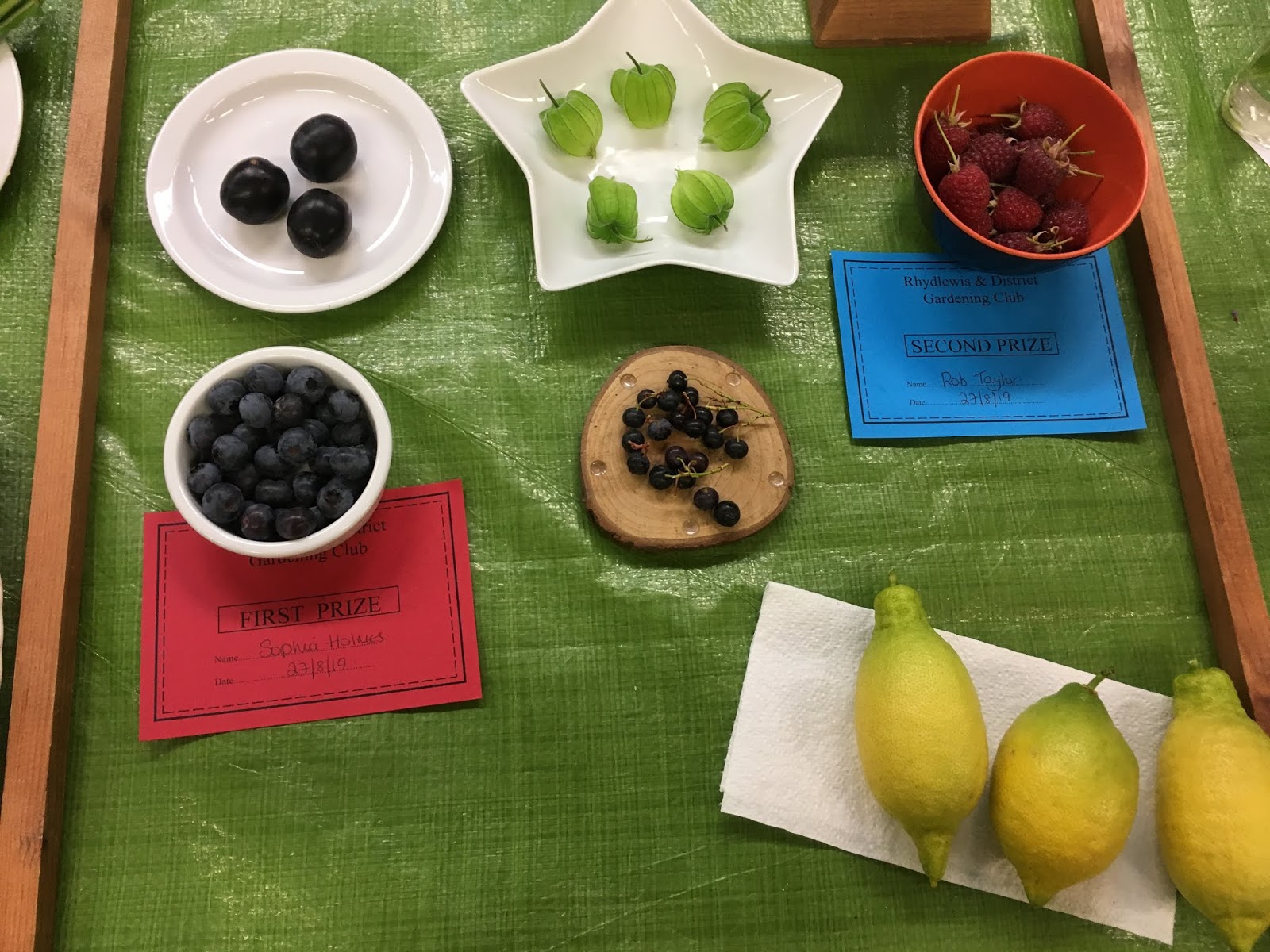
Despite the testing spring and summer weather conditions there were still a lot of entries across all categories, including squashes, cape gooseberries, and home-grown lemons. A range of crafts and home cooking also graced the tables. 


Carrie Davies, winner of the Best Onions Shield
 The prize winners were; Vegetable Challenge Cup – Janette Sharman; Floral Challenge Cup – Janette Sharman and Sara Redman; Homecraft Shield – Sara O’Conner; Best Onions Shield – Carrie Davies and Best Exhibit in Vegetables and Fruit – Janette Sharman. 


Rhydlewis Gardening Club meets at 7.30pm, on the last Tuesday of each month in the village hall, and has a varied and interesting programme.  Club membership is only £10 per year, non-members £2 per meeting – all welcome. Contact the secretary on ninahare00@googlemai.com or tel 01239 851096 FFD


The next meeting is 'Hedgehogs in your Garden'
given by Natasha Winn from Hedgely's Hospital for Hedgehogs; 7.30 as usual at the village hall on September 24th. See you there!


Rhydlewis Gardening Club meets at 7.30pm, on the last Tuesday of each month in the village hall, and has a varied and interesting programme.  Club membership is only £10 per year, non-members £2 per meeting – all welcome. Contact the secretary on ninahare00@googlemai.com or tel 01239 851096 FFD


Friday, 2 August 2019

AUTUMN PRODUCE SHOW SCHEDULE 2019

SHOW SCHEDULE 2019 RHYDLEWIS GARDENING CLUB 


RHYDLEWIS AND DISTRICT GARDENING CLUB

AUTUMN PRODUCE SHOW

TUESDAY 27th AUGUST 2019

RHYDLEWIS VILLAGE HALL

(Please note new timings)

3.00pm – 5.00pm – Staging exhibits

7.00pm – Show opens for viewing and refreshments

7.45pm Prize Giving followed by Raffle

8.15pm - ‘Make an offer’ sale table of donated exhibits

8.45pm – Help to clear tables

For further information please contact the club secretaries 
Nina and Jim 01239 851096; or show secretary Liz 01239 851851

Please see website for schedule copies and showing guidelines – http://rhydlewisgardeningclub.blogspot.co.uk/


 VEGETABLES AND FRUITS
  1. 4 Potatoes (White or Coloured)
  2. 3 Carrots – (any one variety)
  3. 3 Beetroot – (any one variety)
  4. 3 Courgettes – (any one variety) each not exceeding 15.2cm (6ins)
  5. 1 Marrow
  6. 1 Squash
  7. 1 Pumpkin
  8. 4 French Beans
  9. 4 Runner Beans
  10. 10.4 Pods of Peas
  11. 11.3 Cooking Onions
  12. 12.5 Shallots
  13. 13.4 Tomatoes
  14. 14.5 Cherry Tomatoes
  15. 15.1 Cucumber
  16. 16.Collection of Vegetables – 5 varieties (tomatoes can be included)
  17. 17.Oddly Shaped Vegetables
  18. 18.Longest Runner Bean
  19. 19.Collection of Culinary Herbs: Names to be listed
  20. 20.Parsley – 4 cut stems in a vase
  21. 21.3 Cooking Apples (any one variety)
  22. 22.3 Eating Apples - (any one variety)
  23. 23.3 Pears - (any one variety)
  24. 24.3 Rhubarb sticks – to include approx. 7.5 cm (3ins) of leaf
  25. 25.Any other Vegetable not listed in the schedule
  26. 26.Any other Fruit not listed in the schedule
FLOWERS
  1. 27.Vase of Dahlias – 3 heads of any one variety
  2. 28.Vase of Hydrangeas – 3 heads of any one variety
  3. 29.Vase of Roses – 3 stems of any one variety
  4. 30.Vase of Sweet Peas – 5 stems of any one variety
  5. 31.Vase of Cut Flowers – not more than 6 varieties
  6. 32.Tree or Shrub – 1 cut stem for autumn flower, fruit or foliage effect
FLORAL ART
  1. 33.A basket flower arrangement for Harvest Supper – not to exceed 24ins (60cm) overall
  2. 34.A seasonal arrangement incorporating a teapot. Size optional.  

(Categories 33 & 34 can include non-plant accessories, fruit, vegetables and purchased plant items)
HOMECRAFT
  1. 35.A Cottage Loaf
  2. 36.4 Pork Sausage Rolls – (homemade short crust pastry)
  3. 37.1 Quiche – Maximum 12 inches
  4. 38.A Date & Walnut Cake
  5. 39.5 Chocolate Brownies
  6. 40.3 Brown Hens’ Eggs
  7. 41.3 White Hens’ Eggs
  8. 42.3 Ducks’ Eggs
  9. 43.Jar of Jam – Stone fruit
  10. 44.Jar of Jam – Soft fruit
  11. 45.Jar of Jelly
  12. 46.Jar of Chutney
  13. 47.Jar of Pickles
  14. 48.1 Bottle of Homemade Cordial
ART &CRAFT
  1. 49.A Hand Knitted item
  2. 50.An Upcycled Plastic Bottle
  3. 51.A Handmade Reusable Shopping Bag
  4. 52.A Piece of Origami
  5. 53.Any Handmade art or craft on the theme of ‘Sunflowers’ (Any medium)
  6. 54.“What a Pest!” - A photograph not exceeding 12 x 18 inches (30 x 46cms) – can be framed, mounted or unmounted
OPEN TO ALL EXHIBITORS
Entry Fees
Members of Rhydlewis Gardening Club & Children under 12 – Free
Non- Members of Rhydlewis Gardening Club – £1 flat fee regardless of how many entries
RULES
  • Entries in the flower, fruit and vegetable classes, unless otherwise stated should consist of one variety
  • All floral arrangements to consist of fresh or dried plant material unless otherwise stated
  • All exhibits must have been grown by the exhibitor (not applicable to the floral art)
  • For the purposes of the show, “vase” means any suitable container for displaying cut flowers and “pot” means any suitable containing in which a plant can grow
  • Rhydlewis Gardening Club cannot be responsible for anything left in the hall after the Show. If necessary, label vases and containers.
  • ANY OBJECTION TO AN EXHIBIT MUST BE MADE TO THE SHOW SECRETARY ON THE NIGHT OF THE SHOW
  • In the event of a dispute the committee reserves the right to inspect garden.
JUDGES
Rannveig Wallis – Vegetables, Fruit and Flowers
Elonwy James – Homecraft
Sonia Wells & Jan French – Art and Craft
AWARDS
  • Vegetable Challenge Cup - Awarded for the most points gained in the Vegetable and Fruit classes (1 - 26)
  • Floral Challenge Cup - Awarded for the most points gained in the Flowers and Floral Art classes (27 – 34)
  • D & G Williams Shield – Awarded for the most points gained in the Homecraft and Art & Craft classes (35 – 54)
  • Roses Shield – Overall winner of Class 29
  • J.T. Davies Memorial Shield – Best exhibit in Class 11
  • Best Exhibit – Vegetable and Fruit Classes (1 - 26)